The field problem
The next crew needs more than a point on the map.
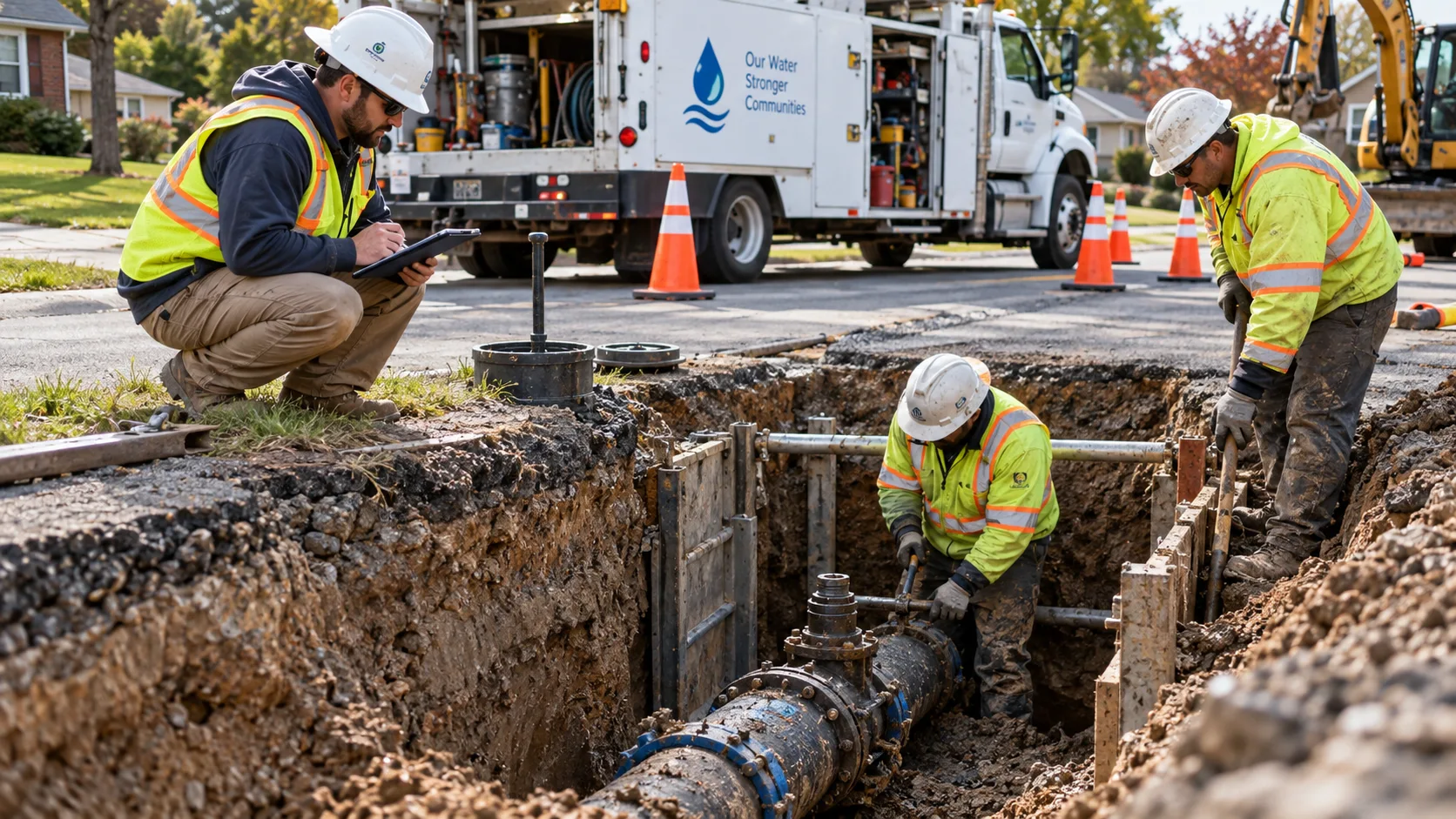
A water-network record may show a valve, but not explain the last maintenance finding, a changed connection, or the uncertainty a previous crew encountered. The useful detail may still be with the employee who worked on it years ago.
Recurring work brings different crews back to the same infrastructure. Each visit tests whether the organization’s knowledge can travel with the task, rather than depending on who is available to answer a call.
What it means for the work
When history is disconnected, every visit starts with uncertainty.
A crew can find a record and still have questions: was this connection observed in the field, does the note refer to this valve, and what changed during the previous maintenance visit?
If the answers live in separate files or individual memories, crew coordination becomes a process of searching and checking again. Unrecorded discrepancies stay unresolved for the next maintenance cycle.
A better starting point
Give crews the best available knowledge, including its limits.
Bring the asset location, documented network relationships, maintenance history, and field observations into a connected record. New crews need to understand both what the organization knows and what they still need to verify.
A record can be useful without pretending that every detail is certain.
How Valve Finder helps
Keep the operational memory connected to the water network.
Valve Finder is a documentation and field-retrieval platform for infrastructure knowledge. It connects mapped assets and documented utility lines with photos, notes, supporting documents, and operational history for authorized teams.
Asset and network context
Document valves and other water-system assets, along with recorded connections between them. Give crews a view of the infrastructure relationships relevant to their work.
Field observations that carry forward
Attach photos and notes to the asset. Describe what the crew checked, what differed from the record, and what remains uncertain so later teams can interpret the information.
History at the point of work
Retrieve asset context and maintenance information when returning to documented infrastructure. Preserve new findings with the record instead of leaving the next crew to reconstruct the previous visit.
A practical workflow
Use a recurring maintenance visit to strengthen the record.
This is a described operating workflow, not evidence of a customer deployment. Start with an existing task where a crew already returns to a documented water-system asset.
Review the existing context
Retrieve the mapped asset, documented connections, and available maintenance information. Identify questions in the record before the crew begins its field checks.
Compare the record with field conditions
Use your established procedures to check the asset and relevant conditions. Record what was observed rather than treating an earlier map or note as current verification.
Document the finding and its limits
Attach photos and maintenance notes to the asset. Describe discrepancies, the scope of the observation, and anything that the next crew still needs to check.
Carry the history into the next cycle
Review the updated context with the team and retain it with the asset. A different authorized crew can begin the next visit with the previous findings in view.
Valve Finder supports documentation and retrieval of recorded information. It does not certify field conditions or replace utility operating procedures, qualified judgment, required locating, or excavation requirements.
Keep learning
Build continuity across maintenance cycles.
Explore how retrieval, verification, and asset history shape what a new crew can actually use.
Browse the Knowledge CenterWhy Operational History Belongs With the Asset
Keep maintenance findings connected to the infrastructure instead of isolated in a work history.
Read articleField Retrieval: The Moment Continuity Becomes Useful
Examine the moment a stored record needs to become usable crew knowledge.
Read articleThe Retirement Problem
Preserve experienced workers’ practical understanding for the crews who follow them.
Read articleYour next step
Can a different crew pick up where the last one stopped?
Use the Infrastructure Asset Continuity Assessment to examine the connection between your records and recurring field work. Explore Valve Finder to see its approach to asset context, documentation, and retrieval.
Discuss your crew’s retrieval workflow